4.9 Google Rating




Why Winter Is the Safest Season for Tree Removal in Minnesota
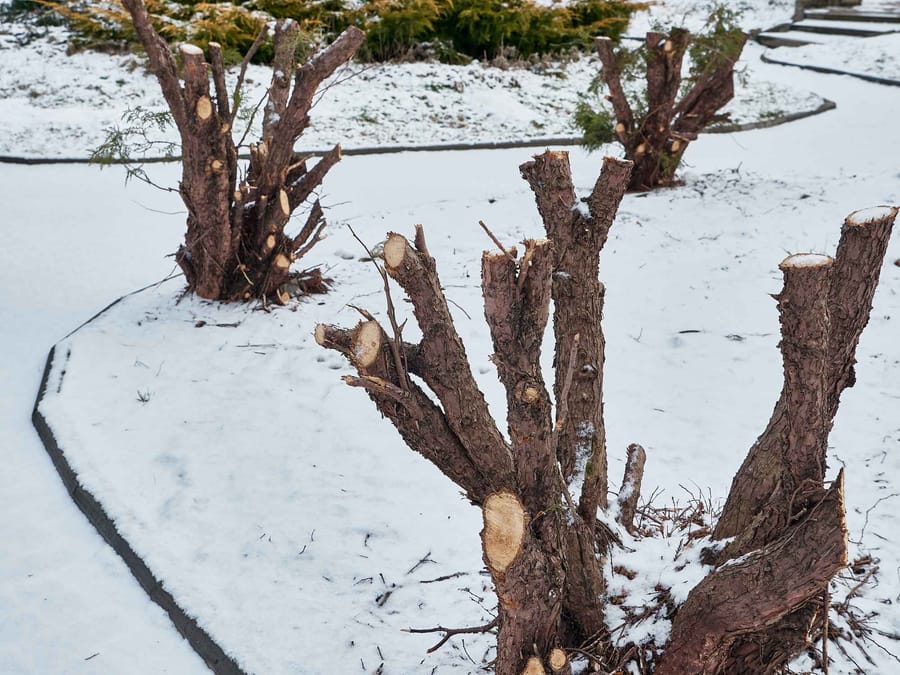
Many homeowners in the Twin Cities and throughout Minnesota assume that outdoor maintenance projects must wait for the spring thaw. However, when it involves the structural integrity and health of your property, the winter season is often the most strategic time for tree removal. The onset of freezing temperatures and snow does not hinder professional arborists. In fact, these conditions create a uniquely stable and safe environment for complex tree work.
The logic behind winter tree removal is rooted in the biology of the trees and the physical state of the environment. During the colder months, trees enter a state of dormancy that minimizes stress and eliminates the risk of spreading seasonal diseases. For a property owner, this translates to a cleaner and more efficient removal process that protects both the remaining landscape and the overall health of the local ecosystem.
Bratt Tree leverages these winter advantages to provide superior service to our clients. By performing removals during the dormant season, we can ensure the highest level of safety for our crews and the least amount of disruption to your yard.
Disease Prevention: The Safe Window for Oaks and Elms
One of the most compelling reasons to schedule tree removal in the winter is the protection of Minnesota’s forest health. Many of the state’s most common and devastating tree diseases are spread by insects that are active only during the warmer months.
Avoiding Oak Wilt and Dutch Elm Disease
Oak wilt and Dutch elm disease are significant threats to our urban canopy. These fungal infections are often spread by beetles that are attracted to fresh cuts or wounds on a tree.
-
The Safe Period: The Minnesota Department of Natural Resources (DNR) identifies the winter months as the “safe” period for trimming or removing oak and elm trees.
-
Insect Inactivity: From late autumn through early spring, the sap-feeding beetles that carry fungal spores are dormant.
-
Wound Closure: When a tree is removed or pruned in winter, there is no risk of overland transmission of disease to neighboring healthy trees.
Managing the Emerald Ash Borer
As the Emerald Ash Borer (EAB) continues to impact ash trees across Minnesota, winter offers a critical window for management. Removing infested ash trees during the “no-fly” period for the larvae prevents the accidental spread of the borer to adjacent areas. By the time spring arrives and the larvae emerge, the infested wood has already been properly processed and neutralized.
Property Protection: Utilizing the Frozen Ground
One of the biggest concerns homeowners have when scheduling tree removal is the potential for lawn damage. During the spring and summer, the soil in Minnesota can be soft and saturated, making it highly susceptible to ruts and compaction. Winter transforms your landscape into a much more resilient workspace.
The Shield of Frozen Soil
The frozen earth acts as a natural shield for your landscaping. When the ground is solidly frozen, it can support significantly more weight without the soil structure being compressed or displaced.
-
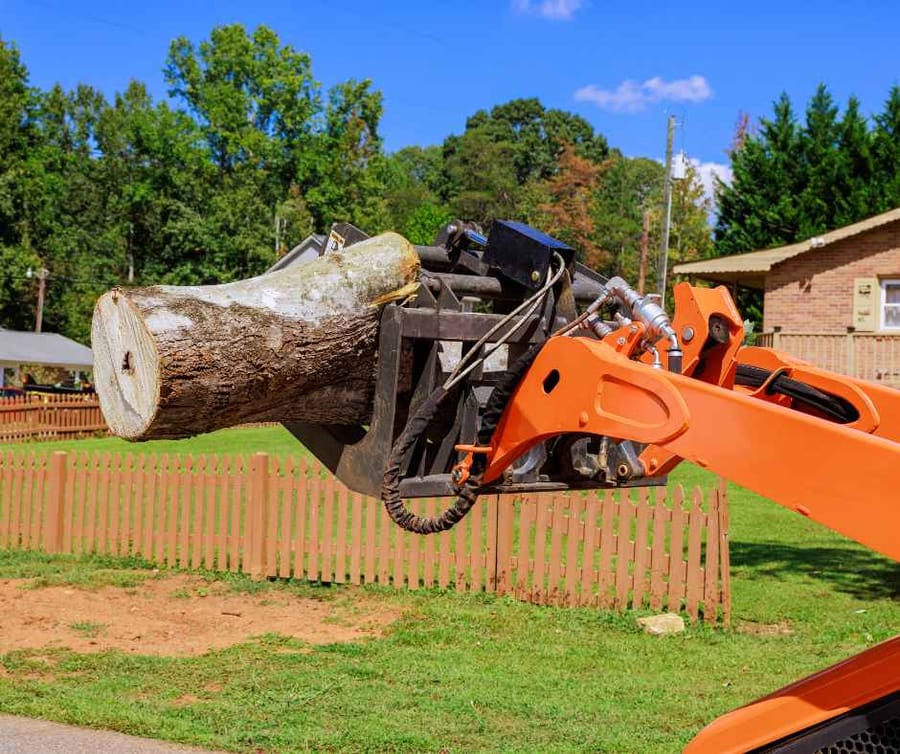
Heavy Equipment Stability: Large-scale tree removal often requires the use of bucket trucks, loaders, or even cranes. Frozen ground provides a stable, concrete-like base for this equipment to operate safely.
-
Minimal Ruts and Tracks: In warmer months, heavy tires can leave deep ruts in a lush lawn. During a Minnesota winter, these machines can move across the yard with almost no visible impact on the turf.
-
Landscape Preservation: Garden beds, dormant perennials, and the roots of neighboring healthy trees are better protected when the soil is firm and immobile.
Efficient Use of Specialized Equipment
At Bratt Tree, we utilize state-of-the-art equipment designed to work in all seasons. The firmness of the winter ground allows us to position our machinery with greater precision. This is particularly valuable for trees located in tight urban spaces or near delicate structures like pools or pergolas.
By utilizing the stability of the frozen ground, our crews can work faster and with a much lower risk of accidental property damage. When the snow melts in the spring, your lawn will emerge intact rather than requiring expensive sod replacement or re-leveling.
Precision and Visibility: The Benefit of a Bare Canopy
The aesthetic appeal of Minnesota’s lush summer foliage often masks the underlying structural reality of a tree. When the leaves fall, a tree’s true architecture is revealed, providing a distinct advantage for safe and accurate removal.
Structural Clarity for Safer Operations
Without the obstruction of a dense canopy, a Certified Arborist can perform a much more thorough inspection of the tree’s crown and trunk. This visibility is vital for identifying hidden hazards that could lead to unpredictable branch failure during the removal process.
-
Identifying Deadwood: Without leaves, dead or dying branches stand out clearly, allowing us to plan a removal path that avoids these fragile areas.
-
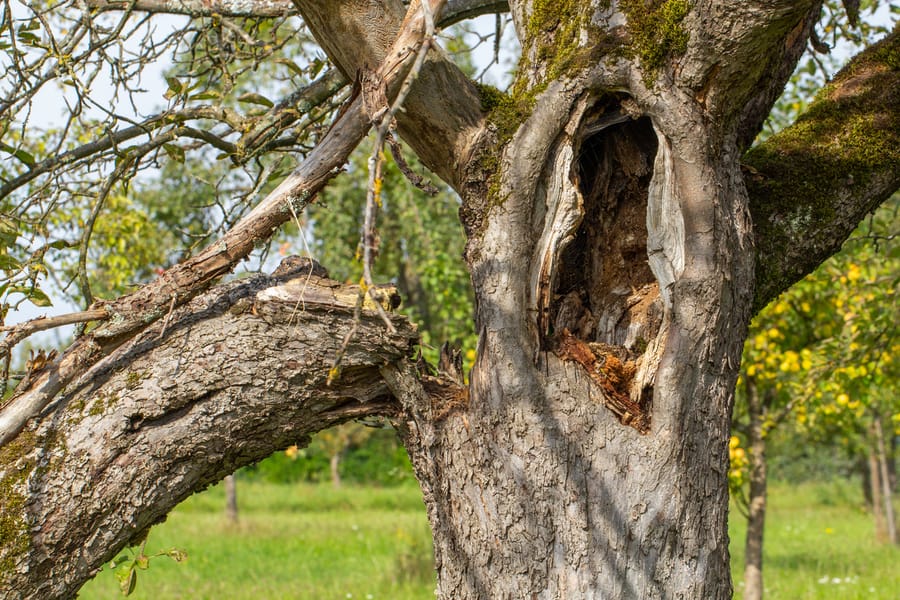
Spotting Structural Defects: Cracks, hollow cavities, and weak branch unions that are invisible in July become obvious in January.
-
Detecting Disease Indicators: The absence of foliage makes it easier to see cankers, fungal growth, or signs of boring insects like the Emerald Ash Borer.
Precision in Tight Spaces
Many homes in the Twin Cities are located on lots with limited space between buildings or near sensitive structures like power lines and fences. Winter visibility allows our team to navigate these tight quarters with a level of precision that is difficult to achieve in the summer.
-
Clear Sightlines: Our ground crews and equipment operators maintain constant, unobstructed visual contact, which is essential for safely lowering large limbs.
-
Accurate Rigging: We can more effectively place ropes and rigging equipment around the most stable parts of the tree, ensuring every piece of the trunk is controlled as it is removed.
-
Reduced Obstacles: In the winter, many homeowners clear their yards of furniture, toys, and garden decor, providing our team with a cleaner, safer work zone.
This increased clarity not only enhances the safety of the crew and your property but also streamlines the entire process. A removal that might take a full day in the summer can often be completed more efficiently in the winter because there is no guesswork involved in identifying the tree’s center of gravity or structural weaknesses.
Managing Hazards Before the Spring Storms
In Minnesota, the transition from winter to spring is often unpredictable and violent. Late-season blizzards and early spring thunderstorms bring heavy, wet snow and high winds that put immense stress on an already compromised tree. Removing a hazardous tree during the winter is a proactive strategy that eliminates the risk of a catastrophic failure during these volatile weather patterns.
Preventing Ice and Snow Loading Failures
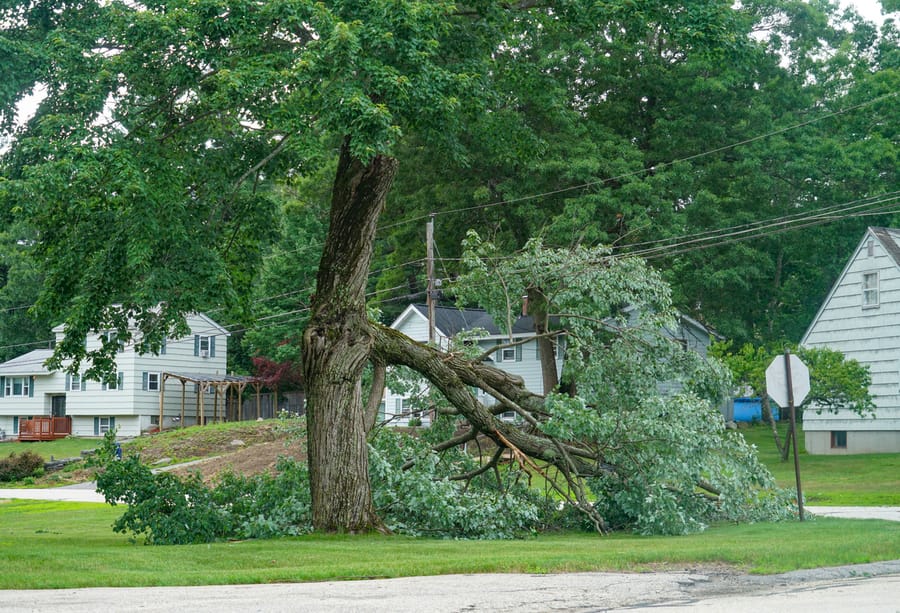
Winter weather itself can act as the final straw for a weakened tree. Ice storms or heavy snow accumulations add thousands of pounds of weight to a tree’s structure.
-
Structural Failures: A tree with internal decay or a weak root system may stand perfectly still in the summer but can snap or uproot under the crushing weight of Minnesota ice.
-
Property Damage: Falling limbs are the leading cause of roof and vehicle damage during winter storms. Removing a hazard in January ensures your home is protected before the next major weather event hits.
-
Safety for Passersby: Trees leaning over sidewalks or driveways pose a constant threat to pedestrians and vehicles when weighted down by snow.
The Financial Advantage of Planned Removal
One of the most significant benefits of winter tree care is the avoidance of emergency service fees. When a tree falls during a storm, it becomes an emergency that requires immediate attention, often at a much higher price point.
-
Lower Costs: Scheduling a removal as part of a planned winter maintenance plan is almost always more affordable than a late-night emergency call during a blizzard.
-
Avoid the “Spring Rush”: Once the ground thaws, homeowners across the state begin their outdoor projects at the same time. By booking in the winter, you avoid the scheduling delays common in April and May.
-
Predictable Outcomes: A planned removal is controlled and orderly. An emergency removal following a storm often involves complex power line issues, structural damage to your home, and a much more dangerous environment for the crew.
By addressing potential hazards during the calm of winter, you take control of your property’s safety. Instead of reacting to a fallen tree in the middle of a storm, you can rest easy knowing that the danger has been professionally removed on your own terms.
A Smarter Approach to Tree Care
Choosing the winter for tree removal is not just a matter of convenience; it is a smarter approach to property management in the Minnesota climate. By aligning your tree care with the natural dormancy of the landscape, you prioritize the health of your urban forest and the safety of your home. The combination of frozen ground, increased visibility, and the elimination of disease transmission makes the colder months the most effective window for major arboricultural work.
Don’t wait for a spring storm to reveal the hidden weaknesses in your trees. Take advantage of the safest season for tree removal by reaching out to our experts today.
Contact Bratt Tree to schedule a comprehensive winter safety assessment and ensure your property is ready for the year ahead.