4.9 Google Rating



Can a Tree Be Saved After Major Winter Storm Damage?
Minnesota winters can be tough on trees. Heavy snowfall, freezing rain, ice accumulation, and strong winds can cause significant damage, leaving homeowners wondering whether their trees will survive.
For homeowners throughout Minneapolis, St. Paul, and the Twin Cities, winter storms can leave behind broken branches, split trunks, and dangerously leaning trees. While some damage may look severe, it doesn’t always mean a tree needs to be removed.
Understanding which types of storm damage are recoverable and which create serious safety risks can help you make informed decisions about your property.
Can Trees Recover From Severe Winter Storm Damage?
Yes, some trees can recover from major winter storm damage, depending on the extent of the damage, their overall health, and the stability of their trunks and root systems. Trees with limited branch damage may recover through professional pruning, while trees with severe structural damage may require removal.
A professional arborist can evaluate whether a damaged tree is safe to preserve.
What Determines Whether a Storm-Damaged Tree Can Be Saved?
Several factors influence recovery:
-
Amount of branch and canopy loss
-
Condition of the main trunk
-
Root system stability
-
Existing disease or decay
-
Tree species and overall health
-
Proximity to buildings and power lines
Even when damage appears manageable, hidden structural problems may create safety concerns.
1. Broken Branches Don’t Always Mean the Tree Needs Removal
Broken branches are among the most common types of winter storm damage in Minnesota.
Heavy snow and ice can place tremendous weight on limbs, causing them to crack or break.
Can a Tree Survive Losing Large Branches?
Many healthy trees can survive losing several branches, particularly when their trunks and major structural limbs remain intact.
Professional pruning can remove damaged branches and help preserve the remaining canopy.
However, large wounds may expose trees to decay, while extensive branch loss can affect long-term growth.
Improper pruning can make the situation worse, so avoid removing large limbs without professional guidance.
2. A Split Trunk May Indicate Serious Structural Damage
Winter storms can cause major branches or multiple trunks to split apart.
These cracks may compromise the tree’s structural stability.
Can a Tree With a Split Trunk Be Saved?
It depends on the location and severity of the split.
Some trees with limited structural damage may be candidates for specialized support systems, such as cabling or bracing.
However, deep cracks extending through the main trunk can significantly weaken a tree.
Severe splits may make removal the safest option, especially when the tree is near a home, driveway, or frequently used outdoor area.
Never attempt to pull split trunks together or install structural supports yourself.
3. Leaning or Uprooted Trees Require Immediate Attention
A tree that suddenly begins leaning after a winter storm may have experienced root damage.
Strong winds and saturated or unstable soil conditions can contribute to root failure.
Is a Tree Dangerous If It Starts Leaning After a Storm?
A longstanding natural lean doesn’t automatically indicate danger. However, a new or noticeably increased lean may signal instability.
Warning signs include:
-
Exposed or lifted roots
-
Cracked soil around the trunk
-
A raised root plate
-
Movement near the tree’s base
-
A sudden change in the tree’s position
If you notice these conditions, keep people and pets away.
Contact a qualified tree professional promptly, especially when the tree is near structures or power lines.
4. How Much Canopy Damage Is Too Much?
A tree’s canopy contains the branches and leaves responsible for producing energy through photosynthesis.
When winter storms remove significant portions of the canopy, recovery may become more difficult.
Can a Tree Regrow Its Canopy After Winter Storm Damage?
Yes, many trees can produce new growth after losing branches.
However, recovery depends on the amount of damage, the tree’s health, and which structural limbs were affected.
A tree may develop new branches over several growing seasons, but new growth doesn’t necessarily replace the strength of major limbs that were lost.
Excessive pruning can also place additional stress on an already damaged tree.
An arborist can determine whether enough healthy structure remains to support recovery.
5. Signs a Winter Storm-Damaged Tree May Need Removal
Although preserving mature trees is often desirable, some damage creates unacceptable safety risks.
When Is Tree Removal the Safest Option?
Professional tree removal may be necessary when a tree has:
-
A severely split main trunk
-
Significant root system failure
-
Extensive internal decay
-
Major structural limbs damaged beyond repair
-
Large unstable branches threatening structures
-
Severe storm damage combined with existing disease
The decision should consider the tree’s stability, likelihood of failure, and potential consequences.
A professional assessment can help determine whether pruning, structural support, or removal is appropriate.
6. What Should You Do Immediately After a Winter Storm?
After a major Minnesota snowstorm or ice storm, homeowner safety should come first.
How to Safely Assess Tree Damage After a Snowstorm
Follow these steps:
-
Keep your distance. Avoid broken branches, leaning trees, and hanging limbs.
-
Watch for electrical hazards. Never approach trees or branches touching power lines.
-
Contact the utility company. Report downed or damaged electrical lines immediately.
-
Inspect from a safe location. Look for visible cracks, broken limbs, and leaning trees.
-
Document damage. Take photographs if you can do so safely.
-
Avoid DIY removal. Unstable branches can shift unexpectedly when cut.
-
Schedule professional help. Contact a tree service for hazardous damage.
Branches under tension can release suddenly, creating serious injury risks.
Never climb a storm-damaged tree or attempt to remove large suspended limbs yourself.
7. How Professional Tree Care Can Help Save a Damaged Tree
Professional tree care can make the difference between preserving a recoverable tree and allowing structural problems to worsen.
What Does a Post-Storm Tree Assessment Include?
A qualified tree professional may evaluate:
-
Trunk and branch stability
-
Root system condition
-
Existing decay or disease
-
Extent of canopy damage
-
Hazards to nearby property
-
Potential for recovery
-
Appropriate pruning or removal options
This evaluation helps determine whether the tree can remain safely in place.
Can Professional Pruning Help a Tree Recover?
Proper pruning removes broken or hazardous branches while preserving healthy portions of the tree.
It can also reduce certain structural risks and support future growth.
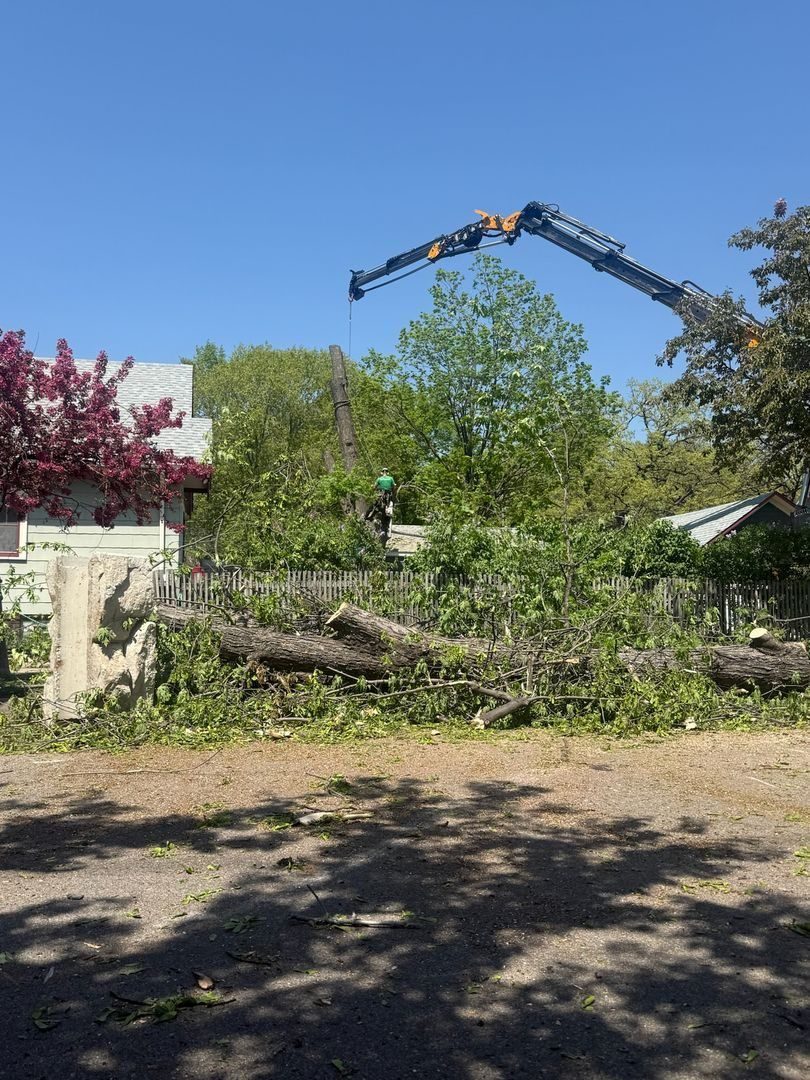
For large or difficult-to-access trees, specialized equipment or crane-assisted work may be necessary.
How Long Does It Take a Tree to Recover From Winter Storm Damage?
Tree recovery varies depending on species, age, health, and damage severity.
Some trees show healthy new growth the following spring, while others require several growing seasons to recover.
What Should Homeowners Watch for in Spring?
Monitor damaged trees for:
-
New leaves and buds
-
Dead or declining branches
-
Worsening trunk cracks
-
Changes in leaning or root stability
-
Signs of decay around damaged areas
If structural problems worsen or the tree shows significant decline, arrange a follow-up professional evaluation.
Winter Storm Tree Damage Checklist for Minnesota Homeowners
Use this checklist after severe winter weather:
-
Look for broken or hanging branches from a safe distance.
-
Check for visible trunk cracks.
-
Watch for newly leaning trees.
-
Look for exposed or lifted roots.
-
Keep people and pets away from unstable trees.
-
Avoid trees contacting power lines.
-
Photograph visible damage when safe.
-
Schedule a professional tree assessment.
-
Arrange necessary pruning or removal.
-
Monitor damaged trees during spring.
Protect Your Property With Professional Storm Damage Tree Care From Bratt Tree
Winter storms can cause serious tree damage, but not every damaged tree needs to be removed. Some trees recover with professional pruning and ongoing care, while others may require removal because of structural instability. For challenging removal projects, specialized equipment and crane-assisted techniques can help manage difficult tree work.
Has winter weather damaged trees on your property? Contact Bratt Tree today to schedule a professional tree assessment and determine whether your storm-damaged tree can be safely preserved or needs removal.