4.9 Google Rating



Fall Tree Inspection Checklist: Which Trees Could Become Winter Hazards in the Twin Cities?
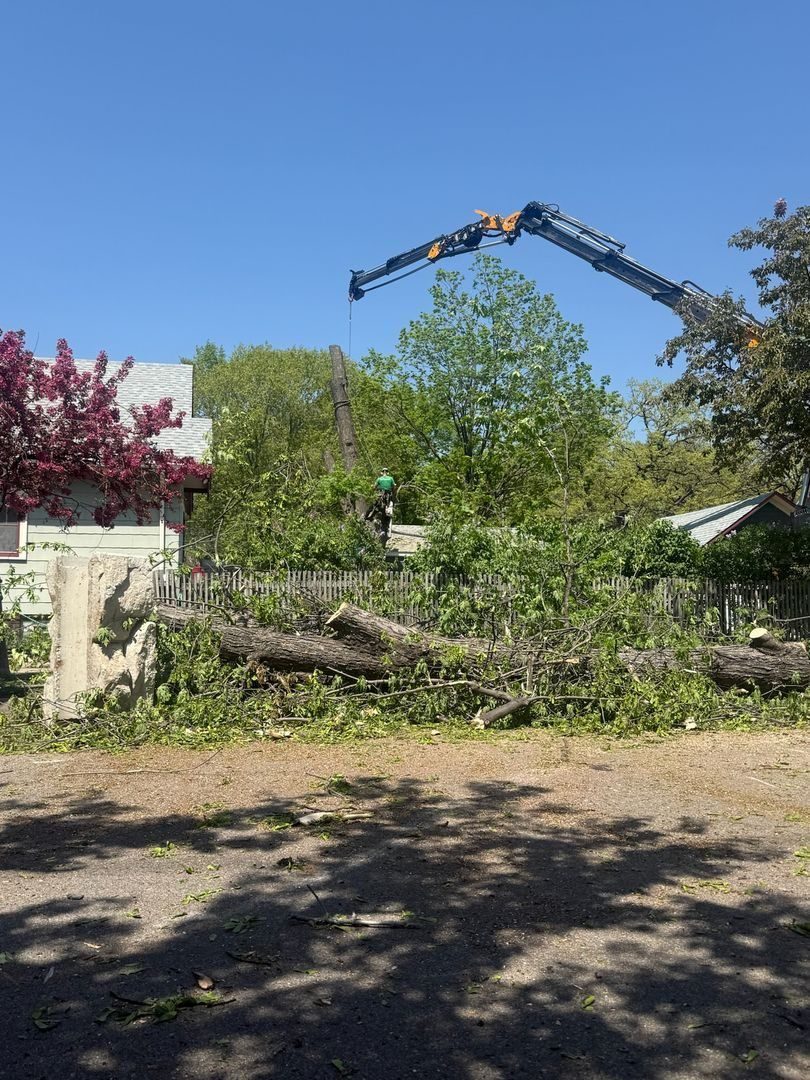
Fall is an important time for Twin Cities homeowners to take a closer look at the trees around their property. Minnesota winters can bring snow, ice, strong winds, and changing temperatures that place additional stress on branches and tree structures. A weakness that is easy to overlook during summer may become more concerning once winter weather arrives.
A fall tree inspection can help identify dead branches, cracks, decay, root problems, storm damage, and other conditions that may require attention. Homeowners can perform a basic visual inspection from the ground, but trees with potential structural problems should be evaluated by a qualified tree professional.
Why Should You Inspect Your Trees Before a Minnesota Winter?
A fall tree inspection helps identify tree problems that could become more significant when winter snow, ice, and wind place additional stress on branches and trunks.
As leaves begin to fall, it can also become easier to see the structure of a tree’s canopy. Dead branches, damaged limbs, unusual branch attachments, and previous storm damage may be more visible.
Not every crack, cavity, leaning trunk, or dead branch means a tree is hazardous. Tree risk depends on several factors, including the severity and location of a defect and what could be damaged or injured if a branch or tree failed. When something looks concerning, a professional assessment can provide a clearer picture.
Fall Tree Inspection Checklist for Twin Cities Homeowners
You do not need to climb a tree to perform a basic fall inspection. Walk around your property and examine trees from multiple angles while staying safely on the ground.
1. Look for Dead, Broken, or Hanging Branches
Start by looking through the canopy for deadwood and damaged branches.
Potential warning signs include:
-
Broken branches caught in the canopy
-
Hanging or partially detached limbs
-
Cracked branches
-
Large sections of deadwood
-
Branches that failed during a previous storm
Pay particular attention to large branches extending over your house, garage, driveway, sidewalk, patio, play area, or other frequently used spaces.
The location of a damaged branch matters. A branch over an isolated area may present a different level of concern than a similar branch positioned above a front walkway or roof.
2. Check the Trunk for Cracks and Splits
Walk around the trunk and look for visible cracks, splits, wounds, or areas where the trunk appears to be separating.
A significant crack can sometimes affect the structural integrity of a tree, especially when it extends into a major trunk or occurs between large stems.
However, homeowners should avoid trying to determine structural stability based on appearance alone. Some tree features that look unusual are not necessarily dangerous, while serious internal problems may have few obvious exterior signs.
3. Examine Major Branch and Trunk Connections
Look at the areas where large branches or multiple trunks connect.
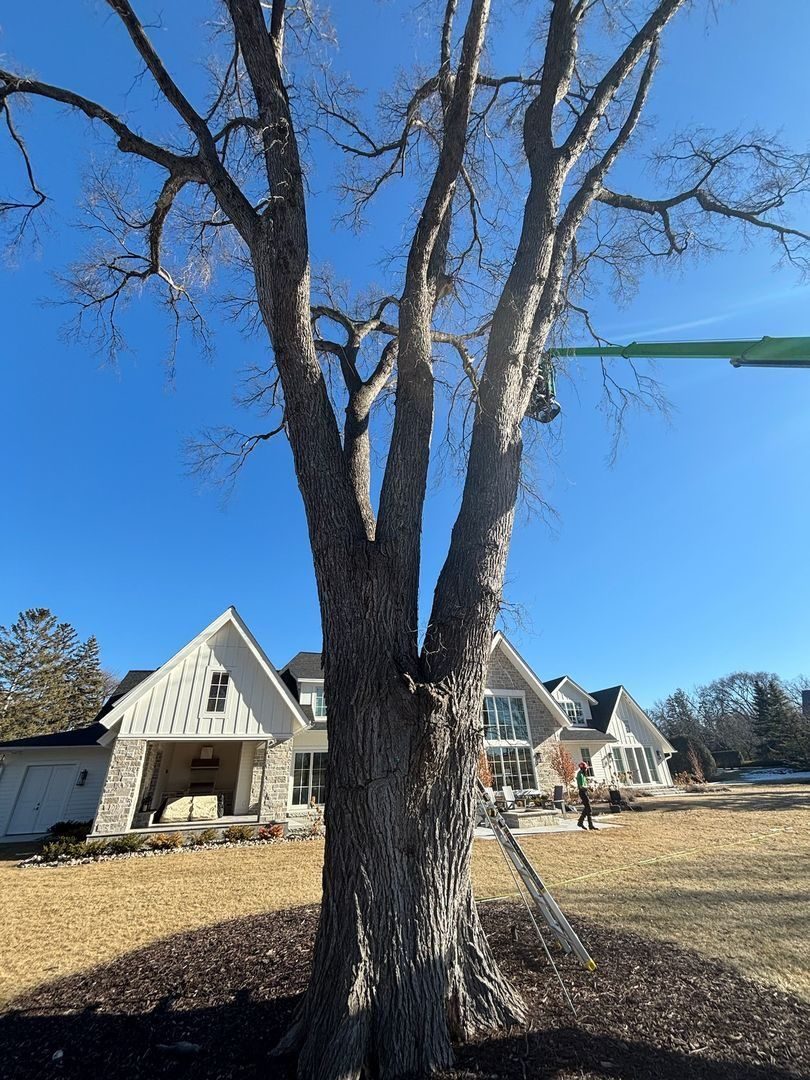
Trees with multiple dominant stems can sometimes develop tight unions where bark becomes included between the stems rather than forming a stronger connection. Previous splitting or visible cracks around these unions may also deserve professional attention.
These features do not automatically mean a tree needs to be removed. They are reasons to have the tree evaluated more closely, particularly when large stems extend toward buildings or other frequently occupied areas.
4. Watch for Cavities, Decay, and Fungal Growth
Tree decay can sometimes be visible from the outside.
Look for:
-
Cavities or hollow areas
-
Soft or crumbling wood
-
Missing or damaged bark
-
Decayed sections
-
Mushrooms or other fungal growth around the trunk or base
Fungal growth does not automatically mean a tree is dying or needs to be removed. Different fungi affect trees differently, and the location and extent of decay are important.
Because internal decay may not be obvious from the exterior, a professional tree inspection may be needed when significant decay is suspected.
5. Inspect the Base and Visible Roots
A tree’s stability depends heavily on its root system, so include the base of the tree in your fall inspection.
Watch for recently exposed or damaged roots, cracks near the base, decay around the trunk flare, or unusual movement in the surrounding soil.
Construction and landscaping can also affect roots. Excavation, soil compaction, grade changes, and cutting large roots may influence tree health or stability.
Root problems are often difficult to assess from the surface, so significant changes around a mature tree should be professionally evaluated.
6. Pay Attention to New or Increasing Lean
A leaning tree is not automatically a hazardous tree. Some trees naturally grow at an angle and remain stable for many years.
A new or increasing lean, however, deserves more attention. Look for accompanying changes such as disturbed soil, lifting around the root area, or cracking near the base.
If a tree appears to have suddenly shifted, especially after a storm, keep people and vehicles away from the potential fall zone and arrange for an evaluation.
7. Look for Changes in the Canopy
Step back far enough to see the entire tree.
Look for substantial dieback, unusually sparse foliage, broken sections, or major differences between one side of the canopy and the other.
Canopy decline can result from many causes, including insects, disease, root problems, environmental stress, or physical damage. A thinning canopy alone does not identify the cause, but significant changes are worth investigating.
8. Check for Previous Storm Damage
Twin Cities trees may enter fall carrying damage from thunderstorms, strong winds, or previous winter weather.
A damaged branch does not always fall immediately. Cracked limbs and partially failed attachments can sometimes remain suspended in the canopy.
Inspect trees that have experienced previous storm damage carefully before winter, particularly if large branches are positioned over structures or frequently used parts of the property.
Which Trees Could Become Winter Hazards?
Rather than focusing only on tree species, consider each tree’s individual condition and surroundings.
Trees that may deserve professional attention before winter include those with:
-
Large dead or broken branches
-
Hanging limbs
-
Significant trunk cracks
-
Previous major branch failures
-
Extensive decay
-
Damaged roots
-
Recent changes in lean
-
Severe canopy decline
-
Significant storm damage
Dead or severely declining trees also deserve evaluation because deterioration can reduce the strength of branches and other structural components over time.
How Do Snow and Ice Affect Twin Cities Trees?
Minnesota winter weather can add substantial loads to tree canopies. Snow and ice accumulating on branches increase their weight, while strong winds can create additional movement and stress.
Existing cracks, damaged branch attachments, decay, and other structural weaknesses may become more important under these conditions.
Healthy trees can still lose branches during severe storms, so no inspection can guarantee that a tree will never experience winter damage. The goal is to identify recognizable concerns before winter weather adds additional stress.
Should You Prune Trees Before Winter?
Fall or dormant-season pruning may be appropriate for certain trees, but the best timing depends on the species, condition, and reason for pruning.
Dead, broken, or hazardous branches may require attention regardless of the season. Other pruning may be scheduled based on the tree’s needs and proper pruning practices.
Avoid topping trees as a way to prepare them for winter. Improper pruning can damage tree structure and create additional problems.
Large branches, elevated limbs, and damaged trees should be handled by trained professionals rather than homeowners using ladders or attempting complex removals themselves.
When Might a Tree Need to Be Removed Before Winter?
Finding a problem does not automatically mean the entire tree needs to come down.
Depending on the tree and the defect, management options may include pruning, monitoring, structural support when appropriate, or other professional recommendations.
Tree removal may be considered when a tree is dead, severely compromised, or has structural problems that create an unacceptable risk that cannot be reasonably addressed through other methods.
A professional assessment can help determine the appropriate course of action.
Can You Inspect Your Own Trees?
Homeowners can perform a useful visual inspection as long as they remain safely on the ground. Binoculars can help you get a better look at upper branches without climbing.
Do not climb a damaged tree, stand underneath hanging branches, use a ladder to reach questionable limbs, or attempt tree work near electrical lines.
If you see a potentially dangerous condition, keep people away from the area until it can be assessed.
Prepare Your Twin Cities Trees for Winter With Bratt Tree
Fall is a valuable opportunity to identify tree concerns before Twin Cities snow, ice, and winter winds arrive. Check for dead or hanging branches, trunk cracks, decay, root problems, canopy decline, new leaning, and damage left behind by previous storms.
If you notice something concerning or simply want a professional assessment before winter, contact Bratt Tree for expert tree inspection, pruning, and tree removal services throughout the Twin Cities.