4.9 Google Rating



Tree Pruning vs. Trimming: What’s Best for Your Tree’s Health in the Twin Cities?
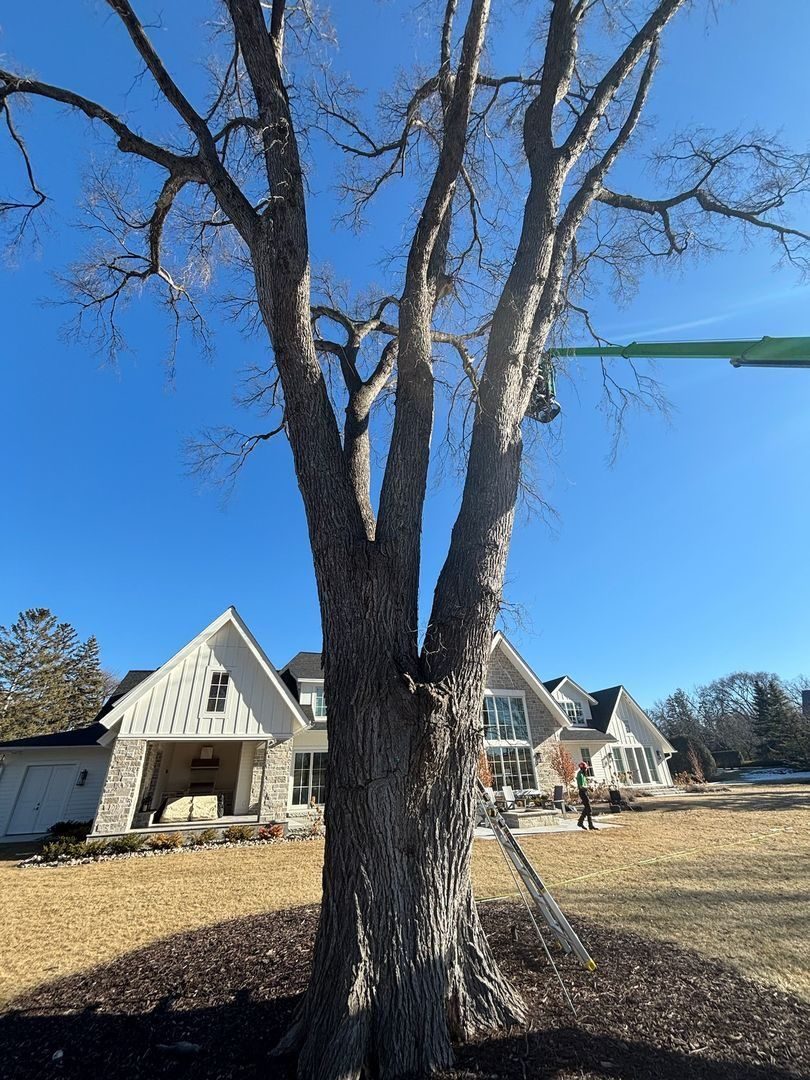
For property owners across Minneapolis, St. Paul, and the surrounding metro area, taking care of your trees is one of the best investments you can make in your home’s curb appeal, shade, and overall safety. However, when it comes to maintaining mature oaks, towering maples, or ornamental apples, many homeowners use the terms “tree trimming” and “tree pruning” interchangeably.
While both involve cutting branches, they serve entirely different purposes in arboriculture. Understanding the difference between trimming and pruning, and knowing when your landscape needs each, is key to keeping your trees thriving through humid Minnesota summers and punishing winter ice storms. Bratt Tree has been delivering science-based, family-owned tree care across the Twin Cities for over 30 years. This guide breaks down the core differences between tree pruning and tree trimming, their health benefits, and how to choose the right service for your landscape.
The Core Difference: Purpose, Science, and Scope
At a glance, both services involve an arborist or crew working with saws and shears in your canopy. The fundamental difference lies in why the cuts are being made.
What Is Tree Trimming?
Tree trimming focuses primarily on aesthetics, shape, and spatial management. As trees and large shrubs grow during the spring and summer, outer shoots can become untidy, block sunlight from reaching your lawn, or encroach on siding, gutters, and power lines.
Trimming involves selectively shearing or cutting back outer growth to maintain a neat appearance, balance the canopy’s shape, and keep branches from crowding nearby structures or walkways. It is common for hedges, ornamental accent trees, and fast-growing deciduous species.
What Is Tree Pruning?
Tree pruning is a health-focused, science-driven arboricultural practice. Pruning involves assessing the internal branch structure, bark integrity, and overall biology of the tree to selectively remove specific limbs.
Rather than just tidying up the exterior profile, an arborist prunes to eliminate dead, dying, diseased, or structurally weak branches. Pruning directs the tree’s energy toward healthy growth, improves air circulation through the canopy, allows sunlight to penetrate inner foliage, and reduces the risk of branch failure during severe storms.
Why Tree Pruning Is Essential for Tree Health
While trimming keeps your yard looking manicured, pruning is what keeps your trees alive and structurally sound. Removing branches creates an open wound on the tree, and how that cut is executed determines whether the tree heals cleanly or develops interior decay.
1. Stopping the Spread of Fungal and Bacterial Diseases
The Twin Cities region faces several significant tree health threats, including Oak Wilt, Dutch Elm Disease, and Apple Scab. When a limb develops a fungal infection or bacterial canker, proper pruning removes the infected tissue before it can travel down into the main trunk or spread to neighboring trees via root grafts.
2. Eliminating Structural Liabilities and “V-Crotches”
As young trees mature, they often develop competing main stems (known as codominant stems) with tight, V-shaped crotches. Included bark gets trapped between these stems, creating a structural weakness that easily splits open under the weight of heavy Minnesota snow or ice. Strategic structural pruning early in a tree’s life establishes a strong central leader and dominant lateral branches, preventing catastrophic canopy splits decades later.
3. Improving Air Velocity and Light Penetration
A thick, overcrowded canopy acts like a sail in high winds, catching the full force of summer thunderstorms and putting immense strain on the root plate. Pruning thins out crossing, rubbing, and interior branches, allowing wind to blow safely through the canopy (reducing wind resistance) while letting sunlight reach inner leaves and turfgrass below.
The Minnesota Timing Rule: When to Prune vs. When to Trim
Timing is everything when making cuts on trees in the Upper Midwest. Cutting at the wrong time of year can attract destructive pests or leave open cuts vulnerable to extreme thermal shock.
Dormant Pruning (Late Fall to Early Spring)
For the majority of Minnesota shade trees, especially Oaks and Elms, dormant winter pruning is the safest and most effective option.
-
Insect Inactivity: Vectors for disease, such as the Nitidulid beetles that spread Oak Wilt, are completely inactive during frozen winter months.
-
Structural Visibility: With leaves gone, ISA-certified arborists can clearly evaluate the tree’s bare branch architecture, spotting structural cracks, decay, and crossing limbs that are hidden by summer foliage.
-
Minimizing Stress: Trees are dormant during winter, meaning cuts do not drain energy reserves or cause sap bleeding.
Seasonal Trimming (Late Spring and Summer)
Light trimming to shape hedges, clean up deadwood, or clear low-hanging branches away from a driveway or roofline can be performed during late spring and summer. However, major structural pruning on healthy live wood should generally be avoided during late summer or early fall, as late-season cuts can stimulate soft new growth that gets killed by the first hard frost.
The Hidden Hazards of “Flush Cuts” and “Tree Topping”
Not all cuts are created equal. One of the greatest dangers facing residential trees in Minneapolis and St. Paul is improper cutting techniques executed by uncertified door-to-door handymen.
-
The Danger of Topping: Tree topping involves indiscriminately chopping off the top of a tree’s main leader branches to reduce its height. Topping shocks the tree, strips its food-producing leaves, exposes raw trunk wood to sunscald and decay, and causes the tree to produce weakly attached “water sprouts” that break off easily in storms.
-
Flush Cuts vs. Branch Collar Cuts: A proper pruning cut must be made just outside the branch bark collar, the swollen area where the branch connects to the trunk. Cutting flush against the trunk destroys the tree’s natural defense zone, preventing the tree from growing calloused wood over the wound and opening a direct highway for interior wood rot.
Trust the ISA-Certified Arborists at Bratt Tree
Taking a proactive approach to your landscape’s trees is the most reliable way to enhance property value, prevent storm-related emergency repairs, and ensure your shade canopy flourishes for generations. While light hedge trimming or snapping off tiny dead twigs are easy weekend tasks for a homeowner, climbing large mature trees, operating high-reach aerial equipment, and making precise anatomical pruning cuts requires specialized safety rigging and certified arboricultural expertise.
Our ISA-certified arborists bring decades of local experience to every property, evaluating soil health, species requirements, and structural integrity before recommending a single cut. We provide transparent upfront pricing, clear written estimates, and expert workmanship backed by a 100% satisfaction guarantee.
Contact Bratt Tree today or request your free expert tree consultation online!